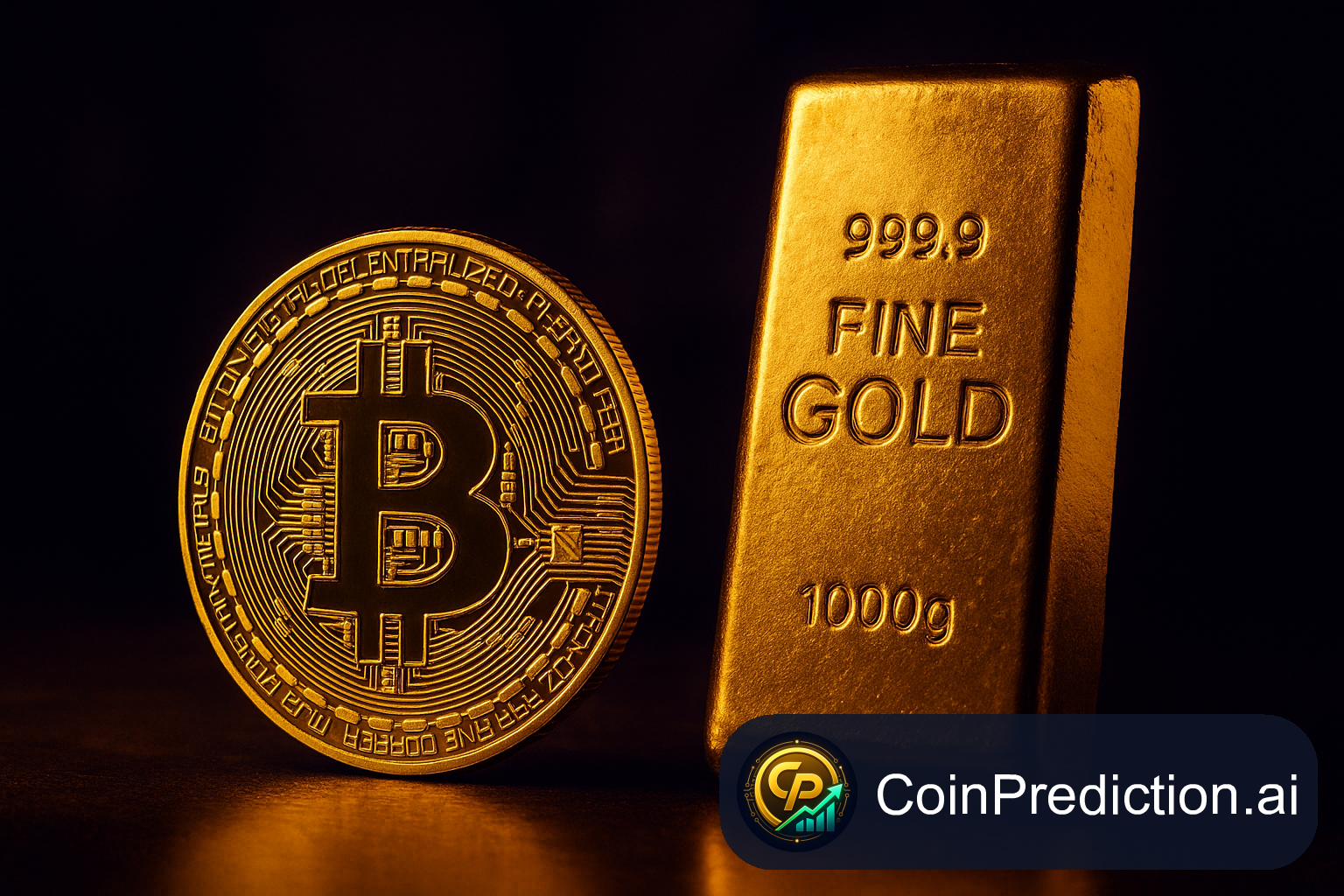
Bitcoin is trading at $76,593.47 today, May 24, 2026. It's up 1.15% in the last 24 hours, though it saw a 2.07% dip over the last week. This kind of action always brings up the big debate: digital gold versus physical gold. With inflation concerns lingering and global tensions still simmering, where should your money be right now?
Bitcoin's Comeback Story in 2026
Bitcoin has shown some serious resilience this year. After a rough start to 2026, dropping as low as $60,000 in January and February due to macroeconomic chaos from the US-Iran conflict, it staged a solid recovery. We even saw BTC cross the $81,000 mark on May 6. That was its strongest level since January. While it's still below its all-time high of $126,198.07 from October 2025, the rebound is clear.
The big story here is institutional adoption. US-listed spot Bitcoin ETFs have been absolute game-changers. These products have soaked up a ton of capital. In early May, daily inflows regularly exceeded the daily mining supply, sometimes by a 10:1 ratio. That means demand is far outstripping the new coins hitting the market. The halving in April 2024 certainly cut new supply, but these ETF flows are now the main driver, not just the cyclical supply shock. This isn't just retail speculation anymore. Big money is taking Bitcoin seriously.
Gold's Steady Hand Amidst Global Turmoil
Gold, the classic safe haven, had a stellar start to 2026. It hit a jaw-dropping all-time high of $5,595 per ounce in late January. This surge wasn't a fluke. Central banks around the world have been aggressively buying gold. They are piling into it because of ongoing inflation worries, currency volatility, and geopolitical uncertainty. Countries are diversifying their reserves away from overreliance on the US dollar, a trend some call "De-Dollarization 2.0".
However, gold has seen a bit of a pullback lately. After its January peak, it retreated to around $4,705 in early May and corrected to $4,483 by May 18. Despite this, the underlying demand from central banks remains strong. They added 244 tonnes in Q1 2026 alone. Gold is doing what it always does: providing stability when the world feels uncertain.
Digital Scarcity vs. Physical Security
The core argument for both assets revolves around scarcity. Bitcoin has its hard cap of 21 million coins, a truly digital scarcity. Gold, on the other hand, offers physical scarcity. It's tangible, finite, and has thousands of years of history as a store of value.
When it comes to market behavior, gold is generally more stable. It tends to perform well during periods of economic uncertainty. Bitcoin, while often called "digital gold," has historically shown more volatility, sometimes acting like a tech stock or risk asset. But that narrative is evolving with institutional money coming in.
Inflation is a key factor for both. The US CPI inflation rate hit 3.8% in April 2026, driven partly by energy prices. Both Bitcoin and gold are pitched as hedges against inflation. Gold has a longer track record here. Bitcoin's role is still being defined, but its fixed supply makes a strong case. One interesting point: gold mining consumes significantly more energy, around 240-250 TWh per year, compared to Bitcoin's roughly 110 TWh, with over 50% from renewables.
The Institutional Shift: A New Era for Bitcoin
What really differentiates this period for Bitcoin is the sheer volume of institutional capital flowing in. We're seeing Bitcoin ETFs absorbing thousands of BTC daily. This kind of institutional validation is a powerful force. It suggests a long-term commitment to digital assets from major players. For instance, Bitcoin ETFs showed stronger and more consistent inflows compared to Ethereum ETFs in May 2026, signaling a "Bitcoin-first" institutional preference.
While central banks continue to back gold with aggressive purchases, Bitcoin is carving out its own space within institutional portfolios. This isn't just about retail traders anymore. Big funds and sovereign wealth are looking at Bitcoin as a serious asset class.
So, which is better today? It really depends on your investment goals and risk tolerance. Gold offers time-tested stability and a hedge against geopolitical shocks and inflation, backed by central bank demand. Bitcoin, trading at $76,593.47, offers significant growth potential with increasing institutional adoption and a strong, digitally scarce supply. It's not necessarily a zero-sum game. Many investors are finding value in holding both. Gold for the safe bet, Bitcoin for the future of finance.